



















the state control Committee, chaired by MK Alon Schuster (Blue and White—National Unity Party), convened on Wednesday to discuss the topic of cyber influence operations, influence campaigns and measures taken by the state to cope with false information ahead of the election year. The debate was held against the backdrop of mounting threats to the integrity of the elections in the digital era, and in light of the State Comptroller’s announcement that an ongoing audit was being conducted on the issue.
Committee Chair MK Schuster: “The ability to impersonate, the dissemination of false information and the accelerated transition of news consumption from established media outlets to digital platforms dramatically reduce the ability of the authorities to cope with the threat. We see many examples worldwide of influence campaigns that intervened in election procedures and even changed results. This is not a political issue of right or left, it is an issue that pertains to the core of democracy. As we enter an election year, it is our obligation to ensure that the state is prepared for the issue in an optimal fashion, certainly after the State Comptroller has announced that a report is being prepared on the matter and has pointed at failings.”
Yuval Hayo of the State Comptroller’s Office said, “The office has arranged for dedicated personnel to deal with cyber and IT systems, while focusing on identifying future risks. Since 2020, after the COVID-19 period, and with greater intensity upon the outbreak of the Swords of Iron war, the office began to deal with a report examining the field of [public] consciousness, and the question whether the state is identifying, locating and addressing the evolving risks. This is a basic and dynamic question, which updates every month and takes on new forms, so it requires continuous monitoring and ongoing preparations. The Government is not always in a sophisticated situation that enables in-depth discussion of the issue. The field of content removal is examined by the State Comptroller’s Office with great sensitivity, with a need to establish precise resolutions and offer a dedicated response for emergencies. Beyond the actions of the Government, the fields of public education and public literacy are also being examined, as part of the overall picture.”
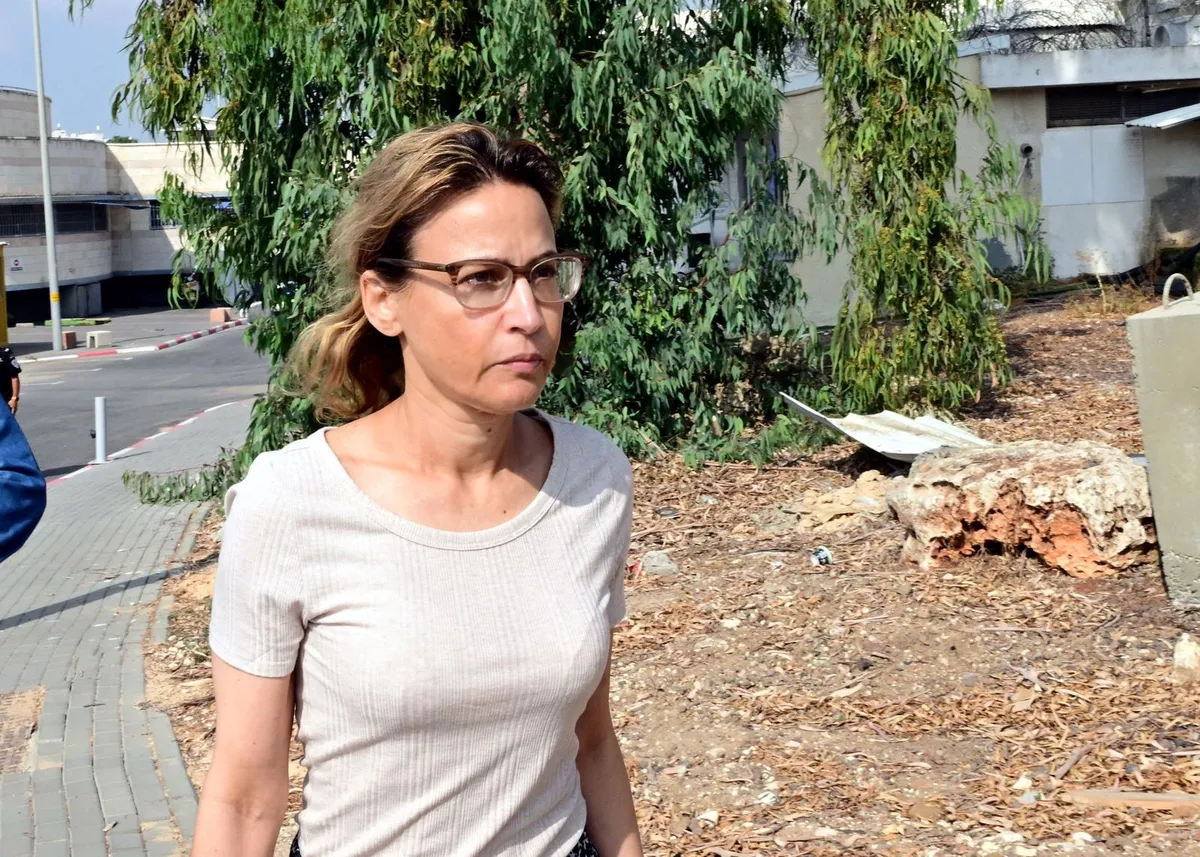
Central Elections Committee (CEC) Director General Orly Ades: “We received the draft of the report by the State Comptroller’s Office. What arises from it is that the conclusions were reached even before our positions were heard—and this usually does not happen. Had the position of the CEC been heard beforehand, the conclusions of the report might have changed. The main tool at the disposal of the CEC is handling of complaints that are submitted in practice; the CEC chair cannot initiate a discussion of his own volition. The question is whether we want the chair of the Central Elections Committee to become a political censor.
“The AI issues are not new, and have already been discussed before the committee chair. Even if all possible tools are at our disposal, there is no way to ‘cleanse’ the internet prior to the elections—in a reality in which every citizen can create a video or a campaign at the push of a button. The CEC does not live in a vacuum. We are aware of the concerns and the threats and operate accordingly. The committee plans to carry out a series of actions, and it is prepared to cope with the issue, but within the tools and powers granted to it by law. If the legislator believes that the tools are not adequate, it should provide the committee with other tools. The Elections and Propaganda Methods Law is a sensitive law, and every attempt to amend it raises political interests. The CEC does not initiate legislative amendments in this field. Perhaps, similarly to the European Union, it will be required in the future to mark content created by artificial intelligence. Along with legislation, the challenges can also be met with digital literacy education, removal of content by legal means, voluntary action by the platforms and use of tools for identifying content,” said Ades.
Nir Kammay of the Israel National Cyber Directorate (INCD): “There are organizations that operate by sending text messages under false pretenses and through various elements, and the INCD works to investigate the events and prevent further dissemination. We operate according to clear rankings of the attack’s severity—from state-level threat, through influence campaigns, to events with potential for harm. Setting up bots, creating fake profiles and psy-op campaigns do not fall under the INCD’s direct realm of responsibility—only when the organization attacks and infiltrates another system.”
المواضيع ذات الصلة